
We Are Not Neutral Observers: The Brutal Truth About How Your Brain Lies to You (And Everyone Else)

Updated: Mar 19
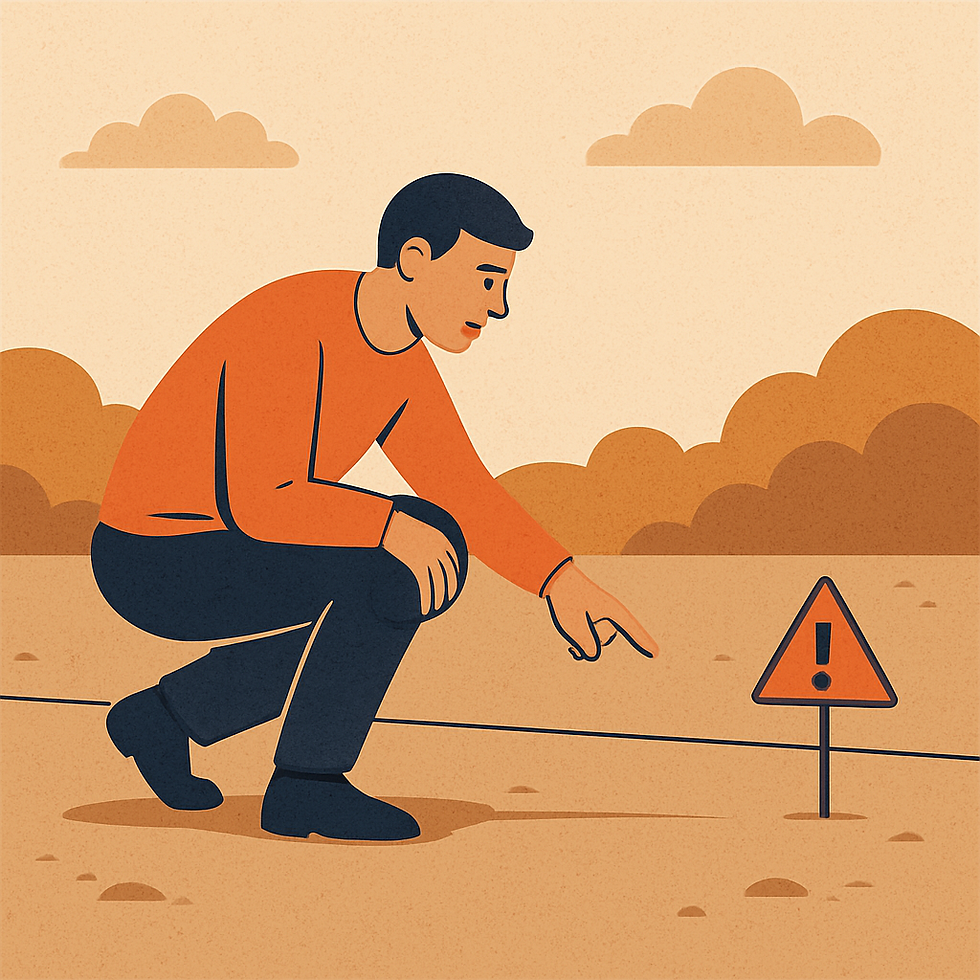
Perception isn’t passive- it’s a rushed, biased prediction machine shaped by your experiences, wounds, parts, and possibly exhaustion. In a world that demands instant takes, this one fact changes everything.

We like to pretend we’re objective cameras: we see, we process, we judge fairly. Let's think about it, 🤔, we don't really... do we.
The truth is humbling and a little terrifying: we are not neutral observers of ourselves or others at all. By the time you think you’re “just noticing” something- that tone, a silence, a look- your brain has already selected, filtered, anticipated, and spun a story.
You’re not meeting reality from nowhere- actually it is quite the opposite. You’re meeting it through your nervous system, your history, your current mood, your unhealed stuff, and often through whichever fractured part of you is running the show right now.
This isn’t a bug. It’s how humans survive. Your brain can’t afford to treat every moment like brand-new data. It predicts to save energy, reduce uncertainty, and keep you moving. Lisa Feldman Barrett nails it: the brain is an active prediction engine, not a passive recorder. It guesses based on past patterns, body signals, and context. Efficient? Yes. Accurate? Often not, especially when you’re anxious, depleted, or triggered.
When your system is calm and resourced, those predictions might land close to reality. But when you’re fragmented, overtired, lonely, ashamed, or relationally raw and depleted? The meanings actually narrow. They speed up. They defend.
Fast becomes the enemy of true.
The Mind Doesn’t Just Observe- It Jumps Ahead
We like to think perception comes first, then interpretation.
It doesn’t.
Your body reacts before your mind catches up: a tightening in the chest, a drop in the stomach, a surge of urgency. Then the story arrives- fast.
“They’re annoyed.”
“I’ve done something wrong.”
“I’m too much.”
Sometimes it’s accurate. Often, it’s simply the quickest explanation your brain can assemble.
That speed is useful in danger. In everyday life, it distorts more than it reveals.
It’s Not Always “You” Interpreting- It’s a Part
If you’ve ever said, “I know I’m overreacting, but…”, well, congrats, you’ve glimpsed parts work in action.
We’re not monolithic. Different parts hold different histories and predictions. For example:
• A protective part reads silence as rejection before a grounded part can check.
• A striving part turns rest into failure.
• A self-critical part spins uncertainty into “I’m not enough.”
• A much younger part drags old shame into a minor trigger.
Activated parts don’t see the full picture- they see what they needed to see to protect you once. Blend with one, and it becomes your “truth” in that moment.
Sensation Hits Before the Story Does
The body often registers before the mind: tightness, urgency, heaviness, collapse.
These are signals.
But the first explanation that follows is rarely neutral- it’s protective.
We begin to confuse:
Activation with intuition
Shame with evidence
Distance with rejection
Depletion with laziness
We Interpret Through Pattern- Not from Nowhere
Your past shapes what feels obvious. The roles you played to belong or connect.
If closeness once meant instability, ambiguity screams threat. If needs burdened others, longing turns to shame. Neutral rooms suddenly sharpened if criticism was chronic.
That isn’t failure or silly. It’s adaptation.
But adaptation is not the same as accuracy.
The Real Work: Don't Obey The First Meaning
The work isn’t to stop reacting.
It’s to pause before deciding what it means. Slowing down doesn’t make you passive. It creates the space to separate signal from story.
There is space:
Between sensation and story
Between reaction and interpretation
Between a part speaking and you believing it
In that space:
Rejection might be uncertainty
Certainty might be fear
Intuition might be pattern
Maturity isn’t neutrality- it’s awareness of your filters.
The Pause is The Shift
In a culture obsessed with immediacy, the pause is your radical rebellion.
Something is happening in me- but I don’t know exactly what it means yet.
My first read might be shaped by history, fear, habit, or a frantic protector.
I’m not neutral here.
That’s not weakness. It’s depth. It's honesty. It's okay. It's the start of seeing more clearly.
We are not neutral observers- of ourselves or others.
Remembering that might be the most compassionate, reality-based move we can make.
If this hits home- if you’re tired of your brain’s quick-draw stories running the show- drop me a comment- a first thought or second or third 😁: What’s one interpretation you’ve caught yourself rushing lately? Or share if a part of you is yelling right now.
I’m a therapist helping people slow down these exact patterns in real time. If you’re ready to explore your own filters (without the fluff) do reach out.

Comments