
We Are Not Burning Out Because We Do Too Much.
- Emily Mitchell
- Jun 1
- 6 min read

Updated: Aug 8

The UK Burnout Report 2026 landed this month. 91% of adults reporting high or extreme stress in the past year. One in five workers off sick for mental health reasons. The 25-34 age group, supposedly at the peak of their professional lives, now the most stressed cohort in the country at 96%.
The response has been predictable. A flood of pieces about nervous system regulation, polyvagal exercises, micro-restoration, and the importance of taking holidays. The assumption underneath all of it: that the life you are living is fine, your body is broken, and the work is to repair the body so it can keep going.
I want to suggest something different. I don't think burnout is what we are telling ourselves it is.
After two decades working across NHS settings, The Priory Group, and a wellbeing centre in the Cotswolds, what I see in people presenting with burnout is rarely the result of too much work. It is the result of a life that has drifted, often imperceptibly, into something the person can no longer locate themselves inside. The exhaustion is not a regulation problem. It is a signal. Some part of them is refusing to continue something the rest of them has not yet admitted isn't working.
If you treat a signal as a malfunction, you spend years trying to silence it.
The Cultural Drift
I want to pause on the moment we are in, because it shapes what walks into the consulting room.
We are living through a period in which discomfort has become evidence of vulnerability, and vulnerability has become an identity. Anxiety is no longer something a person experiences in response to stimuli they need to develop a different relationship with. It is increasingly something a person is. The clinical consequences of this drift are well-documented: identity-based framings reduce agency, reduce engagement with treatment, and in the case of anxiety in particular, actively reinforce the avoidance behaviours that maintain the condition.
The clinical evidence on anxiety is unambiguous. Exposure is the active ingredient. Avoidance is the maintenance mechanism. When institutions build elaborate accommodations around avoidance, letting people skip queues, work from home indefinitely, structure their environment so that no activating situation is ever encountered- this is not kindness. It is, in clinical terms, the maintenance protocol for the illness those institutions think they are accommodating. Every well-meaning system that tells an anxious person to remove themselves from the situation that activates them is removing the precise mechanism through which the anxiety would otherwise extinguish.
I want to say this carefully. Severe, disabling conditions exist. Real accommodations are sometimes needed. But somewhere between the genuine clinical case and the cultural default, we have lost something essential: the assumption that human beings are, by default, capable of meeting hard things and being changed by them.
We were not built to be protected from discomfort. We were built to develop in relation to it.
The Misdiagnosis
Here is the part of the conversation I think is being missed entirely.
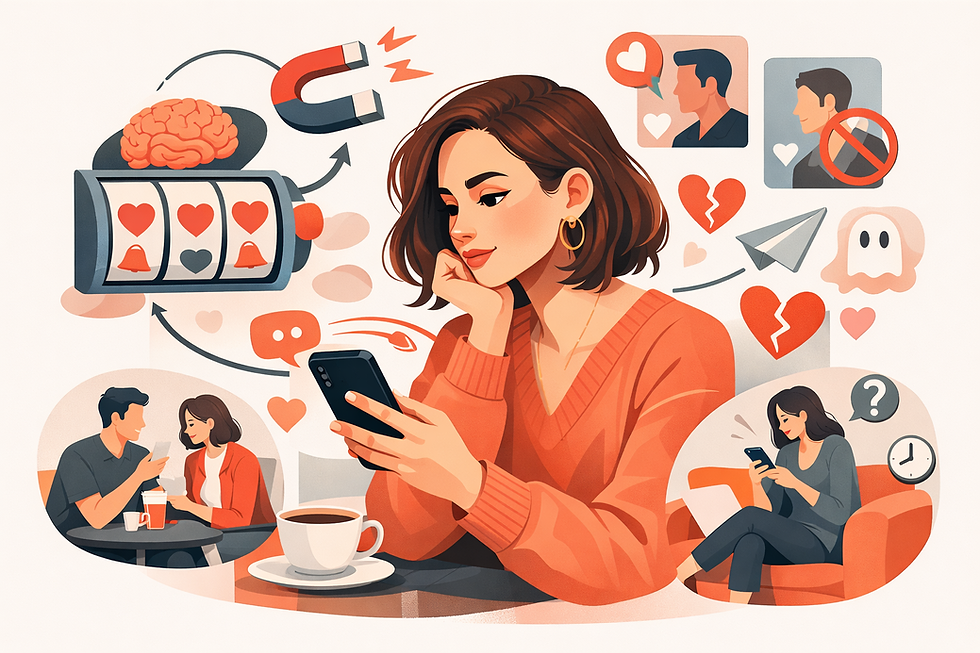
We are not burning out because we do too much. We are burning out because of what we are (choosing) to do/ doing and where we are looking for quick relief. Most of what exhausts a modern adult is not the work itself. It is the small, constant search for numbness or comfort in places that cannot provide either. The scroll. The snack. The drink. The all or nothing obsession. The next distraction. The next dopamine hit. The energy is not being spent on living. It is being spent on the ongoing, low-grade project of not feeling what you are actually feeling.
We live inside a chain of quick fixes that are never quite enough, each one requiring the next to compensate for what the last one failed to deliver. The caffeine compensates for the bad sleep. The sugar compensates for the missed meal. The scroll compensates for the loneliness. The wine compensates for the day.
Nothing lands, nothing satisfies, nothing restores, but each ritual produces just enough relief to make stopping feel impossible.
This is not a moral failure. It is a designed, habitual, cultural and embedded system. It is exhausting in a way no amount of rest will resolve, because the exhaustion is generated by the compensation itself.
This sits on top of a deeper structural problem. We have systematically dismantled the conditions under which the human animal can function. We sleep under blue light. We eat food our bodies do not recognise as food. We sit indoors all day, then wonder why we feel disconnected from the ground. We have replaced communities with feeds, conversation with notifications, meaning with consumption. We have made dopamine cheap and discipline rare. The result is not that we are weak. The result is that we are running an operating system we were never designed for and using what little capacity we have left to anaesthetise ourselves against the consequences.
This is not a metaphor. The data is concrete. Light exposure regulates circadian rhythm, which regulates mood, cognition, immune function, and metabolic health. Whole food intake regulates inflammation, which is implicated in depression. Social contact and shared meaning are among the strongest predictors of mental health outcomes in longitudinal studies. Physical movement is, by effect size, comparable to or better than antidepressants for mild-to-moderate depression. Every one of these has been quietly removed from the average adult's daily life in the past twenty years.
When we then ask why people are exhausted, anxious, and depressed, the answer is not mysterious.
But notice what the dominant response has been. We do not treat the conditions. We medicalise the response to them. We give people a prescription, a diagnosis, a sick note, and a framework that locates the problem inside their biochemistry rather than in the way they are living. We give them permission to remove themselves from the conditions of life rather than the tools to meet those conditions differently.
I am not arguing against medication where it is genuinely indicated. I am arguing against a system that reaches for it as the first response to ordinary signals of misalignment, and against a culture that has come to treat the signal as the problem.
What Real Work Looks Like
So what does real work with burnout actually look like?
It is not primarily just about rest. It is about honesty.
It is about asking: what is your body refusing to keep doing? What have you been pretending is fine? What relationship, what role, what version of yourself has run out of capacity to continue? And then, and this is the part that gets skipped- being willing to act on the answer.
It is about reinstating the conditions humans actually need. Not as wellness aesthetics but as non-negotiable infrastructure. Light in the morning. Movement daily. Food a previous generation would recognise. Sleep protected like the medical intervention it is. Real conversation with other people, in rooms, without screens. The things that sound boring because the culture has trained us to find them boring, but which are the actual operating conditions of the species.
And it is about developing a relationship with discomfort that does not immediately reach for a substance, a feed, a diagnosis, or a story about your own fragility. Discomfort is information. The capacity to sit with it is the capacity for change. The capacity to act on it is the capacity for agency.
Burnout as Refusal
Burnout, in this frame, is not a breakdown. It is a refusal. It is the part of you that has stopped agreeing to the terms.
The work is not to recover so you can return to the same life. The work is to recognise that the life produced the burnout, and that the burnout is asking you a question.
Most people, in my experience, already know the answer. They have not yet given themselves permission to act on it. The standard frameworks- clinical, cultural, pharmaceutical exist in part because they protect people from having to answer that question.
I am interested in a different kind of work. One that takes the human seriously enough to assume they can meet hard things, and that the hard things are sometimes what is asking them to become who they actually are.
We did not get here as a species by being protected. We got here by being honest, disciplined, in contact with our bodies, and in genuine relationship with other people. None of that has changed. We have just forgotten it.
The exit from the cave is not always dramatic. Sometimes it just looks like switching off the phone, going to bed earlier, eating something real, ringing someone you actually love, and asking yourself, finally, what you would have to admit if you stopped pretending.
That, in my experience, is where the work begins.

Comments